
BOOK EXCERPT: "Redfield’s Warning: What I Learned (But Couldn’t Tell You) Might Save Your Life"
"I believe the virus was engineered to infect human beings."

30 minute read
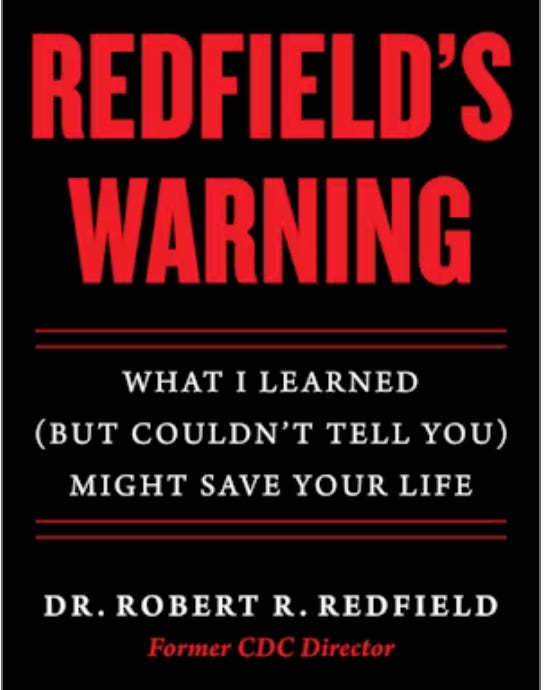
In a recent interview with the DisInformation Chronicle, virologist and former CDC Director Robert Redfield discussed the U.S. need to create a security apparatus to deal bioweapons, and gave his views on the flu vaccine and the mRNA COVID vaccines produced by Pfizer and Moderna. Public trust must be restored in science and public health, he says.
Redfield has a top secret security clearance and told me that all the evidence pointing to a lab accident has not yet been declassified. Based on his review of the science and classified material, Redfield says the pandemic started in a lab in Wuhan, China, that was funded by Tony Fauci, who then tried to cover all of this up.
Redfield’s new book is titled, “Redfield’s Warning: What I Learned (But Couldn’t Tell You) Might Save Your Life.” You can purchase a copy on Amazon.
An excerpted chapter follows.
CHAPTER 10
Dr. Frankenstein’s monster was not built in a day. But the real creator, author Mary Wollstonecraft Shelley, told readers how it was gathered piece by piece and reassembled. It would be extremely beneficial to know where the SARS-CoV-2 virus we fought came from. Knowing its origin might allow us to take steps to prevent a tragedy like this from ever arising again. The Frankenstein story ends with the monster adrift on an ice floe, disappearing into a self-imposed exile. Unfortunately, Covid is here to stay.
When the virus first appeared in the first few days of January 2020, before we had a single case here, Tony Fauci and I met to discuss what we knew and what to do about it. It wasn’t much, just that a potentially deadly pathogen was circulating in Wuhan, China. Even then, at the beginning, we wondered: Where did it come from?
There were two hypotheses. First, it was created naturally and emerged from the Wuhan live animal and seafood market, jumpng from species to species, until it finally figured out how to infect human cells. Second, it had been created by scientists conducting gain-of-function experiments—what would happen if we did this?—at the Wuhan Virology Institute, and it had escaped from that laboratory. As a clinical virologist I believed that the origin of Covid was a direct consequence of science, in particular gain-of-function research. Fauci strongly disagreed.
At that time, it was impossible to reach any conclusion. The debate continued without any firm resolution. That is not surprising. To this day, researchers still have not been able to firmly identify the cause of the 1918 pandemic. While there is evidence to support both theories—the market or the lab, nature or human-kind—I have made up my mind.
Life is the greatest scientific mystery. Scientists have spent centuries slowly unravelling its secrets. So it certainly isn’t surprising we don’t know how viruses were created. But we do know they have plagued human existence through history. Evidence found in neanderthal skeletons, permafrost, and artifacts indicate that viruses— among them herpes, hepatitis B, and papillomavirus—existed 50,000 years ago. Indications of smallpox and polio have been found in Egyptian mummies dating back to 1500 BC. There is no question that viruses are created by nature, perhaps from clashes of proteins from different species or a mix of DNA and RNA.
We can’t create viruses in a laboratory. But we can change them.
Figuring out where the Covid virus came from, especially if it was modified in a laboratory, would enable us to make it less likely it’ll recur. Initially, we believed that Covid was a variation of SARS and MERS. Both of those viruses apparently originated in bats and then were moved adaption by adaption through animals into humans—SARS through civet cats, MERS through camels—so it was natural to assume Covid had followed a similar path.
But neither the SARS nor MERS virus learned how to effectively transmit from human to human. That’s why they caused only a limited number of cases. Covid was very different. Covid had no problem infecting hundreds of thousands of people. It is one of the most infectious viruses we have ever encountered. Why? What makes it so different?
Then we got the first puzzling clue. Apparently, the COVID-19 virus cannot infect bats. Somehow, if it did come from bats, it must have changed so significantly in the transmission process that it lost the ability to bind to bat cells. Researchers have spent the ensuing years searching for the animal that served as the go-between allowing it to go from bats to humans. No one has found it. For me, that argues against the natural creation theory.
I believe the virus was engineered to infect human beings.
It was taught how to do it. I also believe it was made by researchers in a laboratory at the Human Virology Center in Wuhan and somehow escaped to change the world.
It also is important to add that I do not believe this was intentional. To be sure, there are potentially sinister shadows. The lab in Wuhan does have a military component, just as we have our virological research center at Fort Detrick. But it makes absolutely no sense that the military would create and release a virus when they have no way of controlling it. The first victims of such a strategy would be the Chinese people. So there just is no reasonable motive nor logic in that scenario. In fact, from the people I know in China, from the discussions we’ve had and everything I’ve read, my educated guess is that it came from the nonmilitary side.
No matter how secure the precautions are, viruses can escape from laboratories. It happens. Even with every possible precaution taken, there have been incidents. In the 1950s, for example, two men working at Fort Detrick died from exposure to anthrax. A decade later, a worker died from viral encephalitis.
The American government currently operates more than two hundred biological laboratories in twenty-five countries and regions around the world. According to USA Today, there were more than a thousand incidents involving viruses, bacteria, and toxins that could have posed serious danger to people and agriculture between 2008 and 2012. Since then, there has been an average of two hundred events involving these agents reported each year.
Fort Detrick is probably the largest and most secure of our biological laboratories. The American military began conducting research and some biological experiments there during World War II. In 1969, President Nixon, after signing the 1925 Geneva Protocol prohibiting the use of chemical and biological weapons, prohibited all research to create new biological weapons. Since then, Fort Detrick has remained at the center of efforts to defend America from biological warfare. It is a large, heavily secured military post containing some of the most sophisticated biological laboratories in the world. It is the type of top secret facility novelists write about, and much of the research and development that has taken place there to help protect this country will remain confidential. If the walls could talk, they would not be permitted to.
During my military career, I spent considerable time there. I knew the place well. The CDC has the responsibility of monitoring high-containment labs to ensure they remain safe and very secure. During a 2019 inspection, we found six serious violations, including two containment breaches. There were leaks and mechanical problems with a recently installed chemical system to decontaminate wastewater. These were reported as failures to “implement and maintain containment procedures sufficient to contain select agents or toxins.”
Several weeks before that inspection, we received reports that a mysterious respiratory illness had broken out in the Greenspring Retirement Community in Fairfax County, Virginia, that had resulted in sixty-three cases and three deaths. Greenspring is about an hour from Fort Detrick, close enough for us to pay serious attention.
I ordered Fort Detrick shut down. I knew what could happen if a pathogen escaped from a biological lab into the community. There were people who criticized me for that, thinking I was acting too conservatively. I didn’t think I had a choice. That wasn’t going to happen on my watch. We kept it shut down for seven months.
Biological laboratories use a variety of physical barriers to contain pathogens. These include sealed secure doors, double doors, airlocks, and physical separation from other sections. The flow of air going in or out of the lab is filtered. Access is limited, and every person working inside has to wear full personal protective equipment. They leave all that equipment inside the lab. In the higher levels of containment, they shower before exiting. Still, pathogens escape. In 1977, a version of the H1N1 virus, a modified version of the pathogen that caused the 1918 pandemic, escaped from a lab in China and triggered a massive effort to immunize Americans. Between 1966 and 1978, there were three incidents of the small-pox virus escaping from labs in Great Britain. In 1979, anthrax bacteria escaped from a bioweapons lab in Sverdlovsk, then the USSR, and ended up killing at least sixty-four people. In 2004, there were two separate incidents of SARS somehow escaping from a Beijing lab. In 2007, 75,000 Venezuelans were infected and three hundred people died when equine encephalitis got loose from a lab there. Another UK incident in 2007 sparked an outbreak of foot-and-mouth disease.
When I learned a virus was spreading in Wuhan, I couldn’t help but wonder if it had escaped from the Institute of Virology there. I had visited that country several times. In 2000, the Chinese CDC invited me to advise them on the AIDS epidemic then beginning to spread there. They shared all their data with me, they allowed me to travel to all the different parts of the country, and that’s when I developed my relationship with George Gao and other leading scientists. While there, I had also visited several wet markets. They were crowded places of organized chaos. So I didn’t dismiss the possibility it had started in a wet market. To be honest, when the virus first began spreading in Wuhan, I simply did not have enough evidence to reach a conclusion.
Much of the work taking place in biological labs remains secret. Few outsiders know what research is being conducted. But among the most controversial and challenging work is something called gain-of-function research. That term itself is relatively recent because the technology itself only recently became possible. Very basically, it means genetically changing microbes—such as bacteria and viruses—to give them properties that do not come from nature. What would happen if I moved this little protein over there? Our primary concern is any change in a microorganism’s ability to interact with human beings. It often means making them more transmissible or more virulent: easier to infect, more dire consequences. Until the pandemic, few people outside the scientific community were even aware this type of research was being conducted. Gain-of-function research can be beneficial. In some ways, we’re creating new worlds, where possible treasures will be found. This research can lead to the discovery of a defense against a dangerous pathogen. It might be the basis of a vaccine. It can help provide clues to biological puzzles. But in new uncharted worlds, there are also dangers.
We knew from the beginning this virus had come from Wuhan, China. But where in that region and how? Was it natural or was it created by scientists? Did it rise out of the wet market from animals or from research gone awry? And more ominously, did the United States at least partially fund that research?
Even with all the evidence, the official Chinese position is that Covid did not start there. The Chinese Embassy to the United States issued an indignant statement stating flatly, “For some time, various lies and rumors concocted by the US side against China on origins tracing have been repeatedly refuted by China and the international community with detailed facts and data. . . . Origins tracing is a scientific matter, yet the US side is using intelligence agencies to trace the origins, and peddling the old lies that have been refuted under a cloak of intelligence. Washington’s real purpose is attempting to confuse the public and deceive the world, and continuing to seek a ‘presumption of guilt’ against China, politicize the origins tracing, shift the blame onto China, and suppress and contain it.”
That part of this statement, “origins tracing is a scientific matter,” is absolutely accurate. And there is an abundance of good science proving beyond any doubt that the virus originated in China.
Suspicion immediately was raised that it had been created by the military in the Virology Center there. Naturally, social media picked up that thread and magnified the speculation into a rumor. The president began referring to it as “the China virus.” That was accurate, but it wasn’t especially helpful. The entire world was facing a massive threat, and it needed to unite to save lives. I considered it inflammatory and counterproductive to target the Chinese for the pandemic. There’s no benefit in putting labels like that on it. The Spanish flu, for example, probably came from the United States. The disease became known by that name primarily because Spain remained neutral during World War I; unlike the press warring nations, whose censored newspapers did not report the growing death toll, the Spanish papers wrote about it, creating the impression it had started there. The Spanish people were irate at being unfairly blamed for it. Calling it the Spanish flu provided no benefit while alienating citizens of that country.
I knew that we had a core group of dedicated scientists within China working their hearts out to understand this. It would have been more fruitful if the United States had taken the position that the entire world is facing a new pathogen, let’s get together and figure out how to confront it scientifically.
I spoke often with my Chinese counterpart, George Gao. I never doubted his sincerity. He was very honest with me about the outbreak there being out of control, that large numbers of people were being quarantined. But there also was no doubt about the political involvement. The tone of our conversations changed as we moved into April. He became less forthcoming; there was more hesitation in his voice. He would pause thoughtfully before speaking, making our conversations more formal and less interactive. There is an odd feeling when you’re talking to a friend that something has changed. It began to feel like we were communicating through a wall. In his defense, our calls were being recorded by the Chinese government. No surprise, just like our NSA taps into calls.
I never found out how much or what George Gao knew about where this came from. If he did have that information, I never got a hint of it. In China, there are four independent levels of public health agencies. Like here, access to information can be much less transparent than we would like to believe. In 2024, Gao told an interviewer in London he personally had not reached any conclusion. “You can always suspect anything,” he said. “That’s science. Don’t rule out anything.” But he also questioned the wet market theory. “Even now,” he added, “people think some animals are the host or reservoir. Cut a long story short, there is no evidence which animals (were) where the virus comes (from).”
I know George tried and, unfortunately, failed to stop the virus. When that failure became evident, he tried to control it, and he failed at that too. No one knows how many people ultimately died in China. I’m sure it’s exponentially higher than we believe. They died because a deadly pathogen once released into the world cannot be controlled. You release an agent into the environment, and, as a result, you can’t occupy that environment? It makes no sense. The Chinese know that. That’s why I do not believe this was intentional. Not unless they intended to cause a massive health and economic crisis within their own country.
But conspiracy theories continue to flourish as the world looks to place blame. In fact, Chinese government officials and their national media launched a campaign suggesting the SARS-CoV-2 virus had escaped from . . . Fort Detrick. “The COVID epidemic hit America in April 2020, and New York became the epicenter,” according to Chinese social media website WeChat. “In the meantime, at Fort Detrick about 240 miles away, the US government was conducting experiments with dangerous pathogens.” It also was noted in the Chinese media that the facility had been shut down only several months earlier—due to contamination.
The Chinese also suggested the virus might have unknowingly been brought into that country in the frozen carcass of imported beef from an unidentified nation.
Unlike the Chinese claim that it had come from America, a reasonable argument can be made to support the natural theory. There are researchers who believe Covid was not created in the wet market. Instead, they believe it came from Western China or Northern Laos, before it was carried into the Wuhan market by horseshoe bats or animal trade. They base that on research showing that three strains of viruses found in Laotian bats are genetically closer to SARS-CoV-2 than any previously known viruses. These strains can be tracked along the same path that resulted in the 2002 SARS epidemic, ending up in already infected animals being brought to the wet market.
Obviously, none of that is true, but it is possible to build a reasonable circumstantial case using mostly facts. That’s the problem with determining the origin. There are more questions than answers. One thing on which there is general agreement is that this virus came from horseshoe bats.
There are only two possibilities for how it leaped into human beings: natural or manmade. There has been a tremendous amount of investigation into this question, and the result is a lot of opinion. The World Health Organization concluded in 2021 that this was likely a “zoonosis event,” meaning it made the leap from animals to human. The WHO added it is highly unlikely it was caused by a lab leak. Conversely, after two years of hearings and research, a House Committee issued a massive report speculating Covid most likely leaked from the Wuhan lab. They cited several broad reasons. For example, “the virus possesses a biological characteristic that is not found in nature.” And “data shows that all COVID-19 cases stem from a single introduction into humans. This runs contrary to previous pandemics where there were multiple spillover events.”
No matter how it got there, there is general agreement it first surfaced in that market. Most of the first cases could be associated with people who worked at or visited that market. And after the government shut it down, researchers found the Covid virus had spread widely there, particularly in the section of the market where live and freshly butchered animals were sold. Researchers were able to identify the stall where one of the positive samples had been found. A photograph of that stall taken several weeks before the outbreak shows a raccoon dog, a popular Asian breed related to a fox but resembling a raccoon, sitting there; a dog’s DNA was found mixed in a sample of the virus. In a truly great stretch, there are people who wonder if the virus was created in that stall.
Among the people who favor the wet market theory—with limitations—is Tony Fauci. “The environmental swabs that were taken from that part of the market, where there’s photographic evidence that there were raccoon dogs, again is accumulating evidence that it was a natural occurrence,” he said, but then added, “you have to keep an open mind until you definitively prove one versus the other.
“We may never know for certain. It took years and years to find the original source of HIV in chimpanzees. It took several years in SARS-Cov-1, which came about in 2002 or 2003 to show that correlation between a bat to a civit cat to a human. We still don’t know the primary origin of Ebola.”
Of course, there is another possibility that I believe is far more likely: It is probable that one or more already infected human beings brought the virus into the market, spreading it to animals and humans. The question becomes where did they get it? Many people continue to believe it occurred naturally. I’m not among them.
While I have supported aggressively investigating both theories, the data makes me believe COVID-19 infections were the direct result of biomedical research and a subsequent lab leak. There are several reasons to believe it came from the Virology Center. There is extensive evidence that cutting-edge research about these viruses was taking place there. One of the leading scientists there was Dr. Shi Zhengli, the director of the Center for Emerging Infectious Diseases at Wuhan. Dr. Shi is a well-respected researcher and had said repeatedly that the virus did not come out of her lab. There is no evidence that the virus was created there or escaped from there. So this is not an accusation.
But the coincidences are compelling. For two decades Dr. Shi Has been focusing on coronaviruses that come from bats. More than two decades ago, she discovered that bats are efficient carriers of SARS-like coronaviruses and since then has made advances in our understanding of this complex relationship. Her teams have traveled throughout China collecting thousands of virus samples, enabling her lab to compile one of the largest bat-related virus databases in the world and earning her the title, China’s “batwoman.” She has been a leader in studies of the receptors in human, animal, and bat cells trying to figure out how viruses made the leap between species.
It also is known that she has collaborated in genetic engineering experiments with American researchers with both SARS and MERS coronaviruses. A paper she published in 2017 likely identified the source of the SARS outbreak as horseshoe bats found in caves in China’s Yunnan province. But another paper she published that year described an experiment in which her lab at the Wuhan Institute mixed the DNA of several bat coronaviruses, among them to create a new virus. There was nothing nefarious about that. The objective was to better understand how these viruses can be trans- mitted to humans to cause terrible cellular damage and to find a way to prevent that from happening. A lot of people other than myself were certain a pandemic was coming, and there has been a worldwide race taking place to develop a way of protecting us from these viruses. As Dr. Shi later explained, “We must find them before they find us.”
While that might sound like a reasonable justification for conducting that research, in fact I have always been strongly against it. It is my belief that the potential danger greatly outweighs any benefit. Just because we can do it is not a reason to do it.
We lost that round.
In March 2019, only months before the first record Covid cases, she and three colleagues published an article in the respected journal Viruses citing the fact that there had been three large-scale disease outbreaks caused by coronaviruses spilled over from animals with common characteristics. “They are all highly pathogenic to humans or livestock, their agents originated from bats, and two of them originated in China. Thus, it is highly likely that future SARS- or MERS-like coronavirus outbreaks will originate from bats, and there is an increased probability that this will occur in China.”
As Covid began spreading, Chinese social media and American reporters speculated on the possibility her lab was involved. Dr. Shi vehemently denied every accusation, refuting rumors that several of her colleagues may have been ill at the beginning of the outbreak. She angrily told reporters, “How on earth can I offer up evidence for something where there is no evidence?” In a text message sent later she added, “I don’t know how the world has come to this, constantly pouring filth on an innocent scientist.”
American intelligence agencies named three scientists at the Institute as potentially being patient zero, the first known person to be infected with Covid. One of them, Ben Hu, called that report ridiculous and dangerous, saying he had never been ill in the weeks before the disease became reality.
While Dr. Shi is recognized as a leader in research, there are many other labs around the world—in China, the United States, Japan, Hong Kong, Singapore, Australia, the UK, and other regions—conducting similar research. Among the people who collaborated with her was Dr. Ralph Baric, an award-winning virologist at the University of North Carolina. Dr. Baric has been researching coronaviruses for decades and has published numerous reports. A 2015 paper he coauthored showed that coronaviruses carried by bats could pass directly to human beings rather than requiring an animal to transit it. That made sense to me. In my opinion, I just don’t think it’s plausible that this virus went from a bat to another animal—we still don’t know what animal—before going to humans and immediately learning how to be human-to-human transmissible to the point of now causing one of the greatest pandemics we’ve had in the history of the world.
If, as I believe, it was created and escaped from a lab, the next obvious question is: Why was it created? My answer is scientific arrogance. Just because we can do something is not enough reason to do it. It is possible to be too smart for our own safety. In about 2010, scientists in the Netherlands genetically altered a potentially deadly strain of bird flu to make it more easily infectious. And they did it intentionally. That’s arrogance. H5N1 was known to kill about 60 percent of the people it infected, but fortunately it required very close physical contact between a bird and a person to spread this virus. But scientists at Erasmus Medical Centre in Rotterdam and the University of Wisconsin took the virus through a series of mutations essentially to show how simple it is to change its genetic properties, turning it into a highly infectious airborne strain that could be spread by sneezing and droplets. Fortunately, these changes also made it considerably less lethal. These experiments were conducted on ferrets, which are commonly used as substitutes for humans in influenza research. According to published reports, these experiments were at least partially funded by the National Institute of Allergy and Infectious Diseases, which was then directed by Tony Fauci.
Their reason for conducting this gain-of-function research, they explained, was to help scientists create new vaccines and drugs. I argued vehemently that researchers shouldn’t be doing this research until we can be certain there is no chance of leakage. In other words, never.
I feel strongly there is no scientific advantage in conducting this type of research, and the obvious downside is that we are creating pathogens that may cause great harm, for which we don’t have countermeasures—like the COVID-19 virus, which I do believe was a direct consequence of gain-of-function research.
Many of my colleagues disagree with me. In an opinion piece for the Washington Post in 2011, Fauci, Francis Collins, and Gary Nabel, director of the Vaccine Research Center, defended gain-of-function research, writing, “research has allowed identification of genetic pathways by which such a virus could better adapt to transmission among people. This laboratory virus does not exist in nature. There is, however, considerable concern that such a virus could evolve naturally. We cannot predict whether it or something similar will arise naturally. . . . Given these uncertainties, important information and insights can come from generating a potentially dangerous virus in the laboratory. . . . Determining the molecular Achilles’ heel of these viruses can allow scientists to identify novel antiviral drug targets that could be used to prevent infection in those at risk or to better treat those who become infected.”
They concluded this piece by acknowledging—and accepting— the risks. “Safeguarding against the potential accidental release or deliberate misuse of laboratory pathogens is imperative. The engineered viruses developed in the ferret experiments are maintained in high-security laboratories. The scientists, journal editors and funding agencies involved are working together to ensure that access to specific information that could be used to create dangerous pathogens is limited to those with an established and legitimate need to know.”
I understand the argument. I do. I just don’t agree with it. Some proponents suggest we have to create these dangerous viruses to learn how to develop countermeasures to them. I don’t believe that. And I have yet to see any evidence that this research has resulted in life saving benefits. We have enormous scientific resources so if and when we are challenged with a new pathogen, we can apply the tools of science to defend society against those pathogens.
Nature has created an extraordinarily efficient balance. Humankind grew up in harmony with our environment. We are the result of learning how to live in that environment. Many of those things that could kill humans were dealt with—either eliminated or controlled. Sometimes it required weapons, but often we were able to use science. Then, as humanity expanded into different environments, we maintained that balance. We used the knowledge we had acquired to figure out how to deal with new challenges, new threats. We found remedies and preventions. In some situations, we began making modifications to nature in laboratories—many of them productive and beneficial. We learned how to control or in some cases prevent many deadly or crippling diseases. We figured out how to modify the human systems on a cellular level. Things that once killed us were transformed into minor nuisances. People gained confidence in the ability of scientists to keep them safe. As the poets write, we became masters of our fate.
Or so we have come to believe.
Doing it was questionable enough, but then they decided to publish the details of this experiment. Basically, this would hand the recipe for creating a bioweapon to terrorists. There was a long, controversial debate that resonated throughout the entire scientific community about whether or not this type of experiment should be conducted and if so, should the results be published?
Science progresses in very small steps. That happens because scientists share data. Not all information is shared, not the secret formula for soft drinks for example, but the scientific method literally requires discoveries be published so other people, working independently, can prove or disprove them by attempting to reproduce those results. Sir Isaac Newton wrote famously to a colleague in 1675, “If I have seen further, it is by standing on the shoulders of Giants.” His meaning was clear: Only by building on the work of others could he have made his discoveries. Publishing allows claims to be peer-reviewed, to be tested to determine their accuracy.
There is considerable pressure on researchers to publish. Being published in respectable journals brings attention which can benefit a career or lead to grants. As I learned when I published several papers about my work on AIDS, that information also can create controversy. It can cause a lot of debate, sometimes unpleasant debate.
But there also has been general agreement that some things should not be published.
For many people, this was one of them. Lynn Enquist, editor-in-chief of the Journal of Virology and a member of the National Science Advisory Board for Biosecurity—a committee of expert virologists that provides recommendations to the government on potentially dangerous life science issues—remembers, “We had never seen any papers like this with the gain-of-function idea. The idea of increasing virulence, or increasing transmissibility, was not really something that most scientists had ever thought about doing. It was a concern.”
That board suggested the conclusions be published, but not the details of the experiment nor the data. As Paul Keim, the chairman of the NIH’s biosecurity board, warned at the time, “We were saying, ‘Wow—it’s highly transmissible with a 60 percent mortality rate,’ You could kill 4 billion people in a flash, because these viruses go around the world.” They also urged a moratorium on this type of research, and in response those labs agreed to a brief, temporary pause. After about two years of debate, these experiments were published, in full detail; one of them in Nature, the other in Science. Both respected journals.
Ron A. M. Fouchier, who conducted the experiments in the Netherlands, defended his decision to publish, writing in The Journal of Infectious Diseases, “The likelihood of the airborne A/ H5N1 virus being used by individuals or organizations with bad intentions is low. The possibility to do harm with this virus is probably low in terms of its transmission and virulence in humans, because it is unlikely that the virus would spread like a seasonal influenza virus in humans and because the case-fatality rate is likely much lower than currently estimated. The techniques that we used to create airborne A/H5N1 virus are not new and can be found in many virology textbooks. Individuals with bad intentions do not need to read the details in our manuscript because the methods for creating similar viruses have already been published widely.” For Fouchier, censoring the manuscripts would “only create a false sense of security. . . . The more danger a pathogen poses, the more important it is to study it.”
The likelihood of doing harm with this virus is “probably low”? When millions of lives are on the line, that isn’t good enough. The potential exists that our enemies can use this information to create a virus capable of killing millions of people. So “probably low” definitely is not good enough. There is a huge difference between studying a pathogen to learn its capabilities and changing its properties. The fact that this was done in a university lab rather than a secure government facility makes it even more troubling. I can say with some confidence when this type of research is done in a university lab—which is not at all uncommon—we can anticipate these viruses are going to escape.
The wisdom of publishing this material continues to elude me. If the goal is to make it easier for other people to conduct similar research I have to ask, again, why? There is little benefit and large danger in making it easier for other—perhaps less qualified—researchers to do this. And there are always bad actors out there who might be able to make use of this road map.
It is my belief that those centuries of scientific success have made us woefully overconfident. Or, as I describe it, arrogant. We continue to believe we can control whatever we create. We literally believe we can manipulate nature in laboratories and there won’t be any consequences.
That’s a false belief. We know for a fact we can capture potentially deadly pathogens and try to uncover their secrets. We know for a fact we can change the properties of those pathogens to make them less deadly—or more deadly. But we also know for a fact we can’t keep our laboratories secure.
Gain-of-function research is a recipe for disaster. And knowing all that is why I believe COVID-19 was created in a laboratory.
Let me be clear about this: Admittedly, none of the information that has been published demonstrates in any way that COVID-19 was created in a laboratory and leaked into society. There are other reasons I have reached that conclusion.
As I have explained, in order for a virus to infect a cell it has to attach itself to that cell wall. It has to find a place to dock, a receptor site. If the virus can’t find a receptor, it bounces off, which is what happens with almost all bat viruses—among them SARS-CoV-2. Until one day it doesn’t bounce off.
In 2020, I was asked to meet with Secretary of State Mike Pompeo. In the previous months, I had become an unofficial advisor to him. My job was to interpret science for him. At the beginning of this meeting, he handed me a highly classified intelligence document. “Tell me what this means, please,” he asked. He sat silently for several minutes as I read it.
I was stunned. It isn’t often such clear-cut scientific evidence is just handed to you, but this report laid out the reason this formerly benign virus had suddenly become a killer. The report has since been declassified. “What do you think?” he asked me.
I told him, “Mr. Secretary, this is the smoking gun. It confirms that this virus did not come from nature. That it was engineered in a lab to infect human tissue.”
I explained it to him. Investigators had discovered the existence of something called the furin cleavage. Basically, it is a unique combination of twelve nucleotides that have been arranged to create the amino acid known as the furin cleavage site, the receptor that welcomed this virus. The virus can’t infect humans without the furin cleavage site. If you remove the furin cleavage site from the COVID-19 virus, there is no pandemic. There’s no human infection. 20 million people around the world would still be alive.
Epithelial cells in bats contained a receptor allowing this virus to bind to it. But when the furin cleavage was placed in COVID-19, it changed the orientation of that binding site in bats, so the virus no longer recognized the bat receptor. Somehow the virus that initially had been carried by bats had been changed so it no longer could infect bats. But once again, if you remove the furin cleavage site it sticks to the bat receptor like glue and bounces off the human receptor.
The furin cleavage site was well known to researchers. It was first recognized in a lab in the 1960s. By 1972, it was found in certain viruses, but nothing that later would be related to coronaviruses. As Nobel Prize laureate David Baltimore explained in 2021, “Within the SARS-CoV-2 genome there is an insertion of 12 nucleotides that is entirely foreign to (this strain) of virus that SARS-CoV-2 is in. There are many other viruses in this class, including the closest relative of SARS-CoV-2 by sequence and none of them have this (furin cleavage) site.”
At first Baltimore agreed that this was “the smoking gun.” He has since backed off a bit. “There are other viruses that have furin cleavage sites, other coronaviruses, though not the family of beta-coronaviruses. So this sequence’s nucleotides could have hopped from some other virus. No one has identified a virus that has exactly this sequence, but it could have come from something close, then evolved into the sequence that we see today. . . . I’m perfectly willing to believe that happened, but I don’t think it’s the only way that that sequence could have appeared. The other way is that somebody could have put it in there. You can’t distinguish between the two origins from just looking at the sequence. . . . When I first saw the sequence of the furin cleavage site—as I’ve said other beta coronaviruses don’t have that site—it seemed to me a reasonable hypothesis that somebody had put it in there. Now, I don’t know if that’s true or not, but I do know that’s a hypothesis that must be taken seriously.”
Since then, the search has continued—without success—to find this unique cleavage in the same strain of virus. Still, many respected researchers continue to believe this was a naturally occurring mutation. When you look at it as an isolated event, that argument is as valid as anything else. But it wasn’t isolated. In order to believe that it was a natural event, you have to pretty much ignore the gain-of-function research then being conducted at Wuhan with this virus and the questionable security of those labs. All of that, combined with the fact that no one has been able to identify the animal that might have served as the conduit, makes me confident it came from a lab.
And I know what that portends for the future.
As it turns out, a majority of people seem to agree with me. As did Secretary Pompeo, who told reporters, “I can tell you that there is a significant amount of evidence that this came from that laboratory in Wuhan.”
At that point, opinion was decidedly mixed. Less than a third of Americans believed it came out of a lab, Since then, that has changed significantly. By 2025, about two-thirds of Americans agreed with me that Covid was engineered by researchers. Around the world, opinion continues to move in that direction. In 2025, German intelligence agencies reported with significant confidence that it leaked from a lab. The French Academy of Medicine almost unanimously supports the belief it leaked from a lab.
As investigations continued into how this happened, surprising information emerged, including the probability that the NIH not only supported gain-of-function research being done at the Wuhan lab, it paid for it—at least partially. There is absolutely no evidence that any of this was ill intentioned. It certainly wasn’t an act of bioterrorism. But it was misguided. The intent was to understand what permits this virus to replicate more efficiently and prepare for it. It’s like building an army for a war that might never come. It’s a defensive strategy.
When this claim that the NIH funded gain-of-function research at the Wuhan lab first arose, Tony Fauci was adamant that did not happen. At one point, he told a congressional committee, “The NIH has not ever and does not now fund gain-of-function research in the Wuhan Institute.” The debate became enmeshed in political maneuvering. It basically has come down to an interpretation of the meaning of gain-of-function.
But in May 2025, Dr. Jay Bhattacharya, the NIH’s new director, admitted during a staff town hall, “It’s possible that the pandemic was caused by research conducted by human beings. And it’s also possible that the NIH partially sponsored that research.”
He went on, “If it’s true that we sponsored research that caused a pandemic—and if you look at polls of the American people, that’s what most people believe, and I looked at the scientific evidence, I believe it is what we have to do is make sure that we do not engage in research that’s any risk of posing any risk to human populations.”
Obviously, I agree with him. Any sensible person does. We may never find definitive evidence proving one way or another the origin of the virus. But that should not stop us from heeding Dr. Bhattacharya’s warning. The fact is that research currently being conducted in insecure labs around the world has the potential of causing the next pandemic.
And as a result, millions of people may die. Millions and millions and millions . . .
Redfield's role now is to continue the lie that viruses are a threat. This continues the fraud to fund a "security apparatus to deal bioweapons".
We know its all a lie because nothing has changed. They killed millions of people and this guy, who has been part of this cabal his whole career, is now supposed to be the canary in the coal mine? Who's solution is to keep the fraud alive?
Cmon Paul. I cant tell if your that clueless, or you're part of it.
This is nothing more than a control scheme for those stupid enough to fall for it again. Those stupid enough to keep getting "flu" shots.
Paul, I’ve been going through the Epstein files. It’s a tough slug. But, what is hugely interesting is how Epstein and Gates constructed an elaborate plan for donors to add even more wealth to their already bulging portfolio in the event of a pandemic. They talk about how to avoid taxes, arms length, launch, credibility with the WHO for branding. I haven’t finished by a long stretch and have to look up investment lingo but what strikes me is the elaborate planning to rake in tons of money.